
Stepper Motor vs Servo Motor: How to Choose for Your Machine
Choose a stepper motor for high-torque, low-speed, short, repeatable moves with a steady load, where low cost and simple setup matter. Choose a servo motor for high-speed, low-torque, changing loads or fast cycles, because its encoder corrects position in real time.

Stepper Motor vs Servo Motor: Side-by-Side Comparison
The closed-loop stepper is included because it is often the right answer when an open-loop stepper struggles but a full servo system is more than the machine needs.
Swipe the table sideways to see every column →
| Feature | Open-loop stepper motor | Closed-loop stepper motor | AC servo motor |
|---|---|---|---|
| Control | Open loop, no position feedback | Stepper plus encoder, closed loop | Closed loop with a high-resolution encoder |
| How it moves | Fixed steps, 1.8° (200 per revolution), smoothed by microstepping | Same steps; the drive corrects any position error | Continuous motion, the drive follows the encoder |
| Torque vs speed | Highest at low speed, falls as speed rises | Same curve, but more of it is usable without losing steps | Rated torque held up to rated speed, commonly 3,000 rpm, plus short peak torque |
| Overload | Can miss steps without knowing | Corrects the error, or raises an alarm | Corrects the error; peak torque absorbs load spikes |
| Heat and noise | Draws full current at rest, so it runs warm; audible at mid speed | Current follows the load, so it runs cooler and quieter | Current follows the load; quiet and smooth |
| Setup | No tuning | Little or no tuning | Gain tuning, with auto-tuning on most drives |
| System cost | Lowest | Medium | Highest |
| Best for | Simple, low-speed moves with a steady load | Stepper jobs where a lost step is not acceptable | High speed, fast cycles and changing loads |
How a Stepper Motor and a Servo Motor Work
Stepper motor: moves in fixed steps
A stepper motor turns in fixed increments. A standard two-phase hybrid stepper moves 1.8° per full step, or 200 steps per revolution, and the drive can split each step into microsteps for smoother motion. The controller sends one pulse per step and assumes the motor followed.
In an open-loop system there is no feedback, so if the load is too heavy the motor can miss steps and nothing reports it. Steppers give their highest torque at low speed and hold firmly at standstill, which is why they suit short, repeatable moves.
Servo motor: corrects itself with an encoder
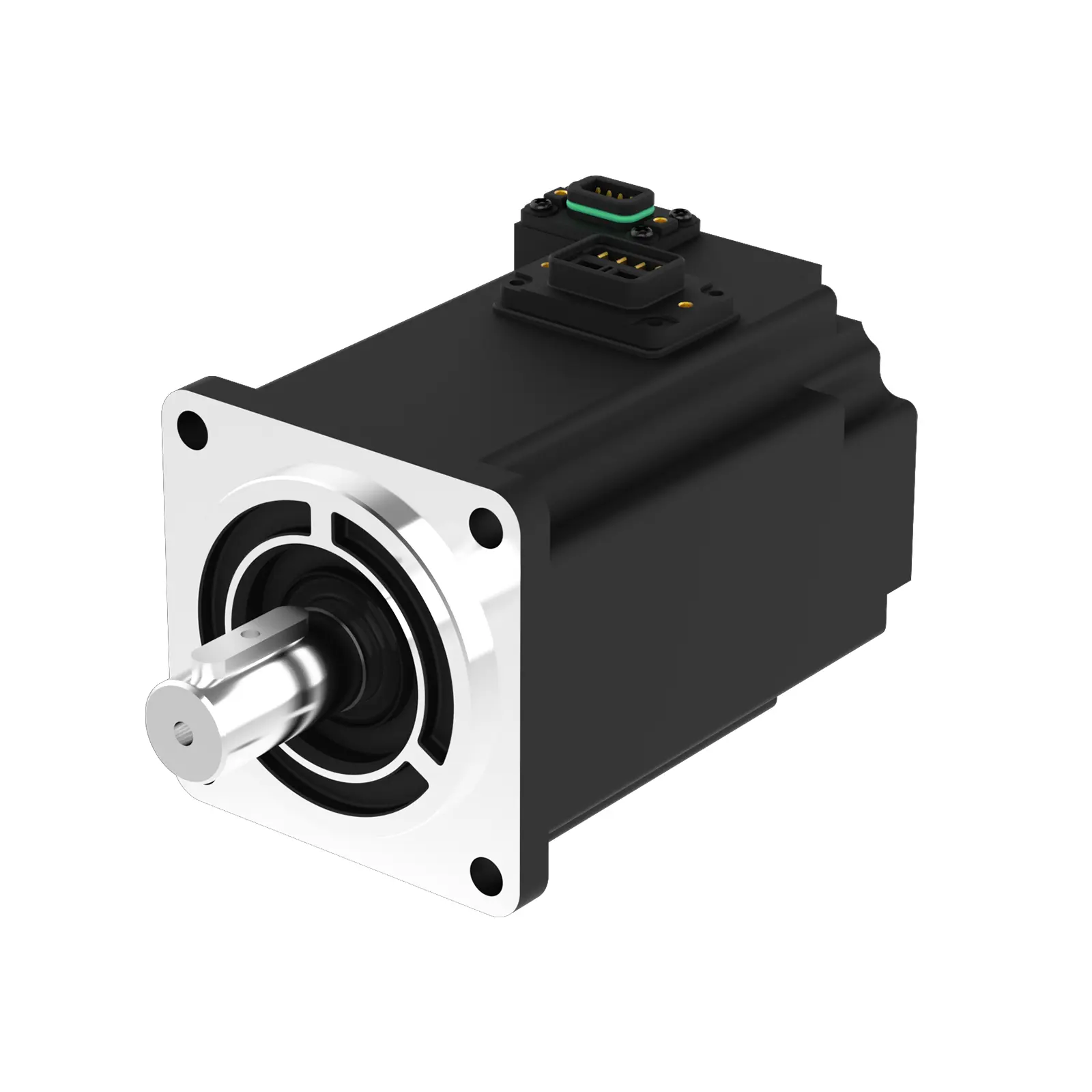
A servo motor carries an encoder that reports the shaft position back to the servo drive thousands of times a second. The drive compares where the motor is with where it should be and adjusts the current to close the gap. The RSHA series AC servo motors we supply use a 17-bit magnetic or 23-bit optical encoder.
Because the loop is closed, a servo keeps its rated torque up to its rated speed and can deliver short bursts of peak torque to accelerate a load or ride through a load spike.
The closed-loop stepper
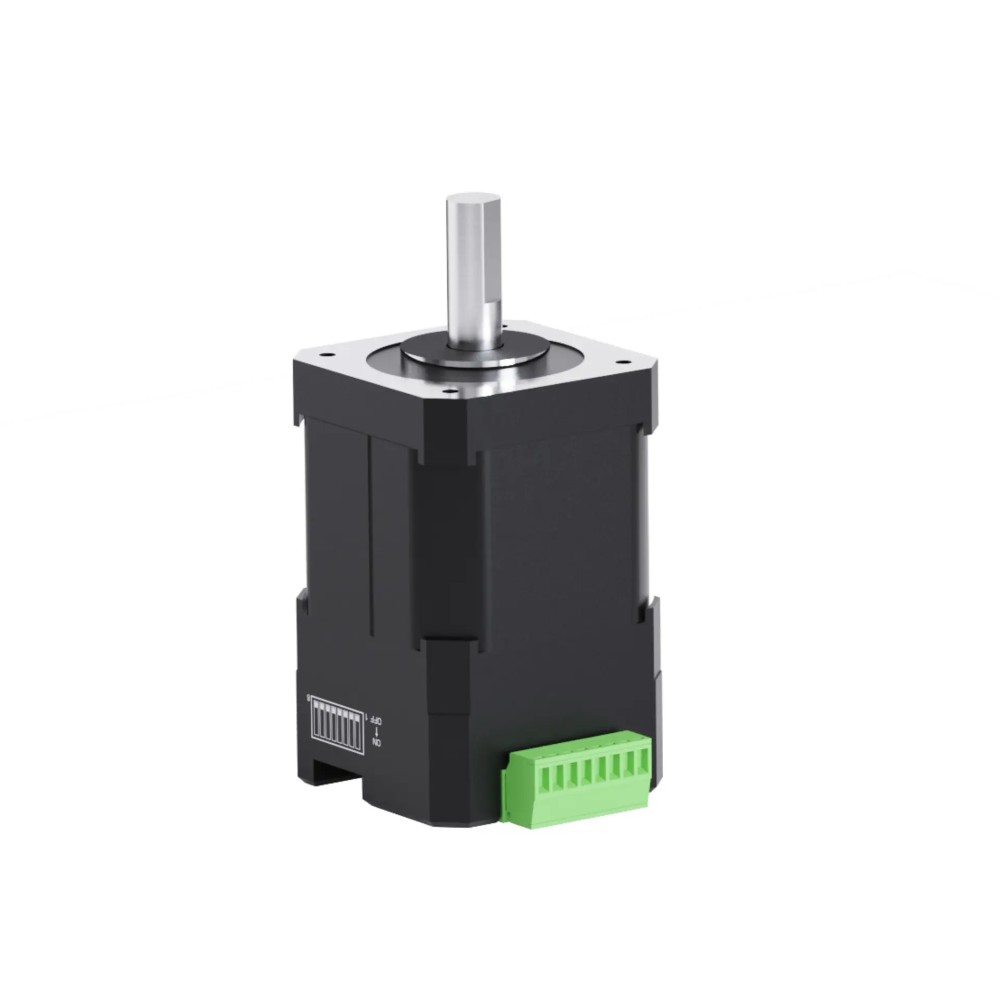
A closed-loop stepper motor, also called a stepper servo or hybrid servo, adds an encoder to a stepper motor. The drive corrects position errors, raises an alarm if it cannot, and lowers the current when the load is light, so the motor runs cooler and quieter. It keeps the stepper's low-speed torque and simple setup at a lower cost than a full servo system.
Torque and Speed: The Difference That Decides Most Machines
Most wrong choices come from comparing the wrong torque figure. Stepper catalogues lead with holding torque, which is the torque at standstill. As speed rises, the current in the windings has less time to build, so the available torque falls. By around 800 rpm a typical stepper has lost most of its low-speed torque, so around 800 rpm is a typical practical top speed. A higher drive voltage can push this further, so check the curve for your motor.
A servo motor of similar size has a lower continuous torque than the stepper at low speed, but it holds that torque almost flat up to its rated speed, commonly 3,000 rpm, and can add short bursts of peak torque. So a stepper suits high-torque, low-speed work, and a servo suits high-speed work at steady torque.
- Stepper motor torque
- Servo motor torque
- Stepper motor: high torque, low speed
- Servo motor: high speed, lower continuous torque
When to Choose a Stepper, a Closed-Loop Stepper or a Servo
Choose a stepper motor when
- Moves are short and repeatable, at low to medium speed
- The load is light and steady, with no sudden spikes
- The axis must hold position firmly at standstill
- Low cost and simple wiring matter more than top speed
Typical uses: dispensing, dosing pumps, valve positioning, small index tables, light XY tables.
Choose a closed-loop stepper when
- You want stepper cost and simplicity, but cannot accept lost steps
- An open-loop stepper runs hot or noisy on your machine
- Loads vary a little, but speeds stay low to medium
- You need an alarm output when position is lost
Typical uses: small CNC routers, engraving and laser tables, labeling, slower filling machines, light pick-and-place.
Choose an AC servo motor when
- The axis runs fast, above about 800 rpm, or must accelerate hard
- Loads change during the cycle, or the load inertia is high
- Output per minute decides the machine's value
- Several axes must move in sync, or you need torque control
Typical uses: flow wrappers, form-fill-seal machines, high-speed filling, CNC axes, winding and textile take-up, robotics.
Which Motor for Which Machine
The usual choice for common machines and axes. The final answer always depends on the load, the speed and the output you need.
Swipe the table sideways to see every column →
| Machine or axis | Usual choice | Why |
|---|---|---|
| Dispensing, dosing pumps, valve positioning | Stepper | Slow, precise moves, and the motor holds position at rest |
| Small CNC router, engraving or laser table | Closed-loop stepper | Low cost, and the encoder stops lost steps from scrapping a part |
| Sticker labeling machine | Closed-loop stepper or Servo | A stepper suits slower lines; a servo suits high label counts per minute |
| Liquid or powder filling | Servo or Closed-loop stepper | A servo holds dose accuracy at high output; a closed-loop stepper suits slower machines |
| Flow wrap and form-fill-seal packaging | Servo | Fast cycles, and the film must register to print marks at speed |
| Rotary index table | Servo with a reducer | Table inertia is high; a servo reducer brings it down. Light tables can use a geared stepper |
| Heavy CNC, milling and cutting axes | Servo | High rapid speeds and cutting forces that change through the cut |
| Winding and textile take-up | Servo | Smooth speed and torque control keep the tension steady |
| Conveyor indexing and pick-and-place | Servo or Stepper | A servo for high cycle rates; a stepper for light, slow payloads |
Machine not listed? Send us the axis details and we will recommend a match.
How to Choose: A 6-Step Checklist
- Define the moveWrite down the distance, the time allowed, the dwell and the moves per minute. From these you get the top speed and the acceleration the motor needs.
- Find the torque at your running speedRead the motor's torque–speed curve at your operating speed, not the holding torque on the first line of the datasheet. For a stepper, keep a margin of about 30 to 50 per cent.
- Check the inertia ratioCompare the load inertia seen at the motor shaft with the rotor inertia. A high ratio makes any motor hard to control. A reducer lowers the reflected inertia by the square of its ratio, so a 5:1 reducer cuts it 25 times.
- Decide what a lost position costsIf a missed step scraps a part, jams the machine or breaks a tool, use a closed-loop stepper or a servo rather than an open-loop stepper.
- Match the controllerMost PLCs send pulse and direction signals, which suit both steppers and servos. On multi-axis machines, fieldbus drives such as the ECR60 EtherCAT stepper drive or a motion controller cut wiring and add diagnostics.
- Compare the whole system costAdd the drive, motor and encoder cables, a brake if the axis is vertical, and the time to commission. A cheaper motor that needs a bigger frame or long tuning can cost more overall.
Stepper and Servo Products We Supply
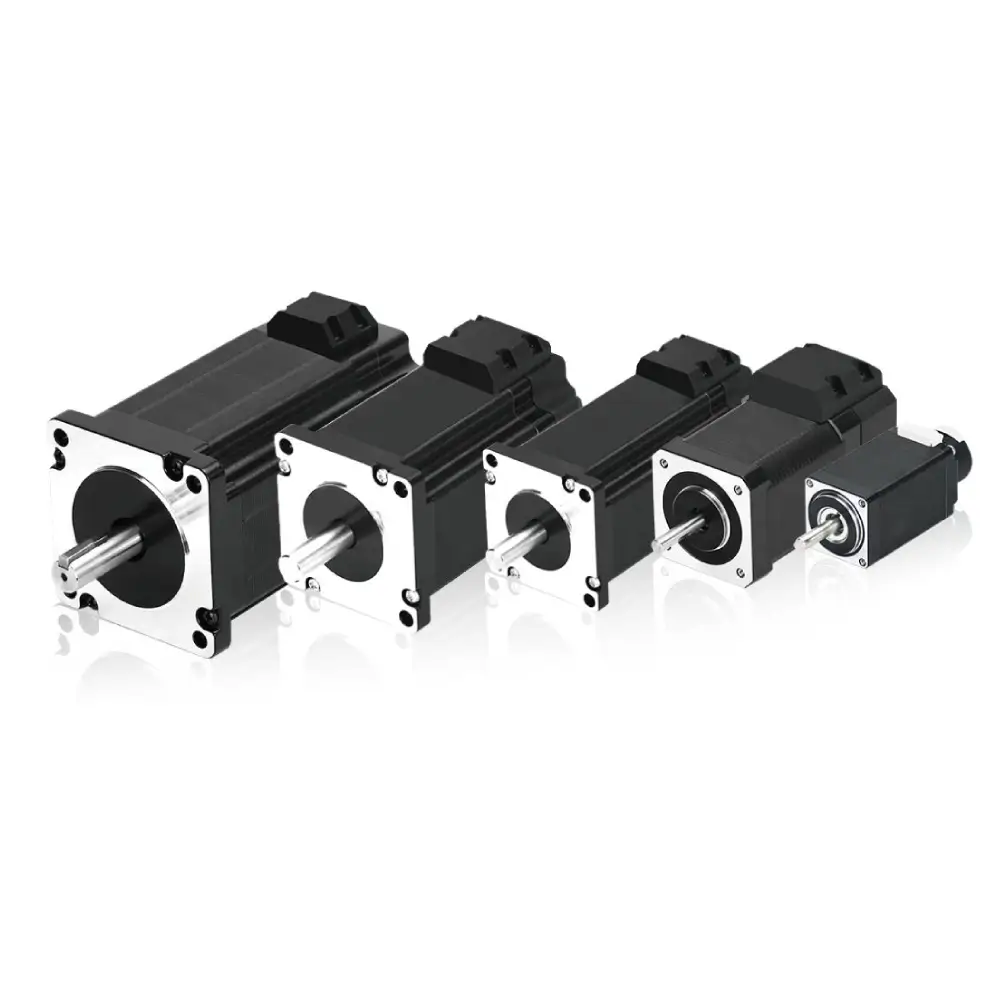
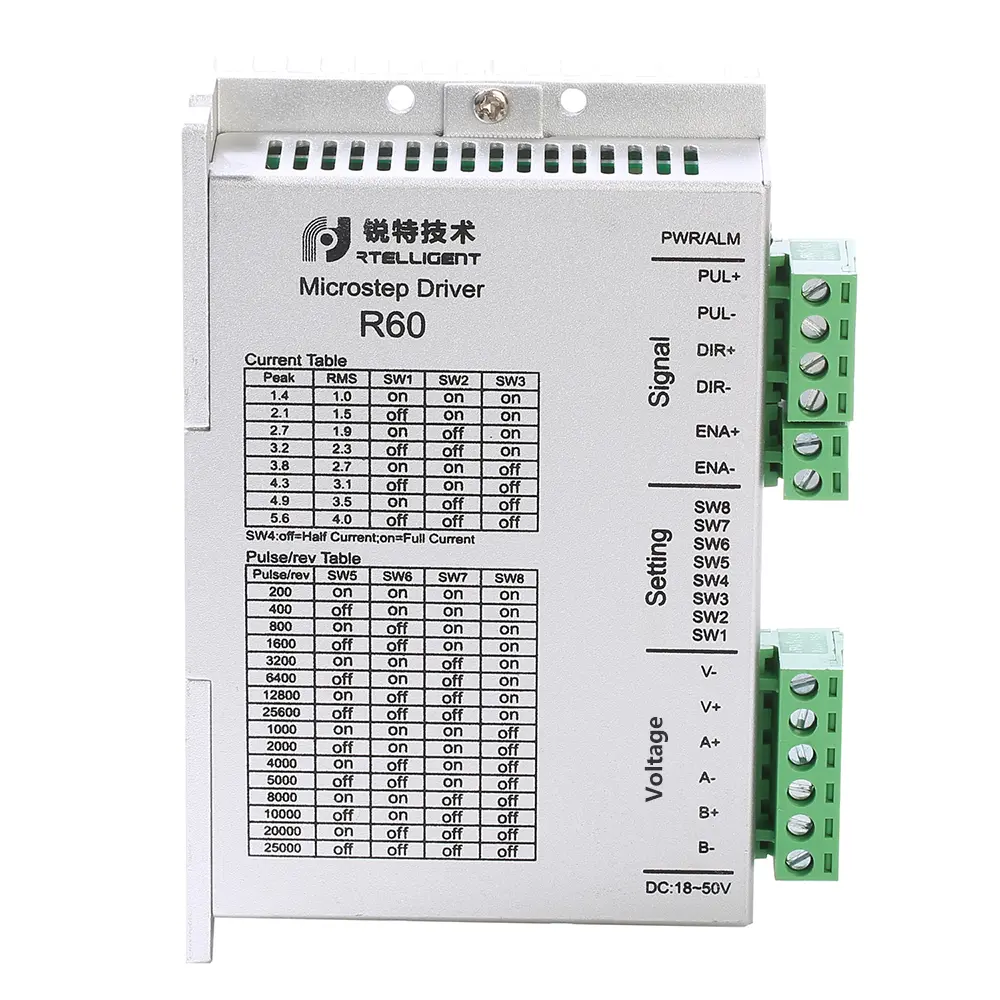
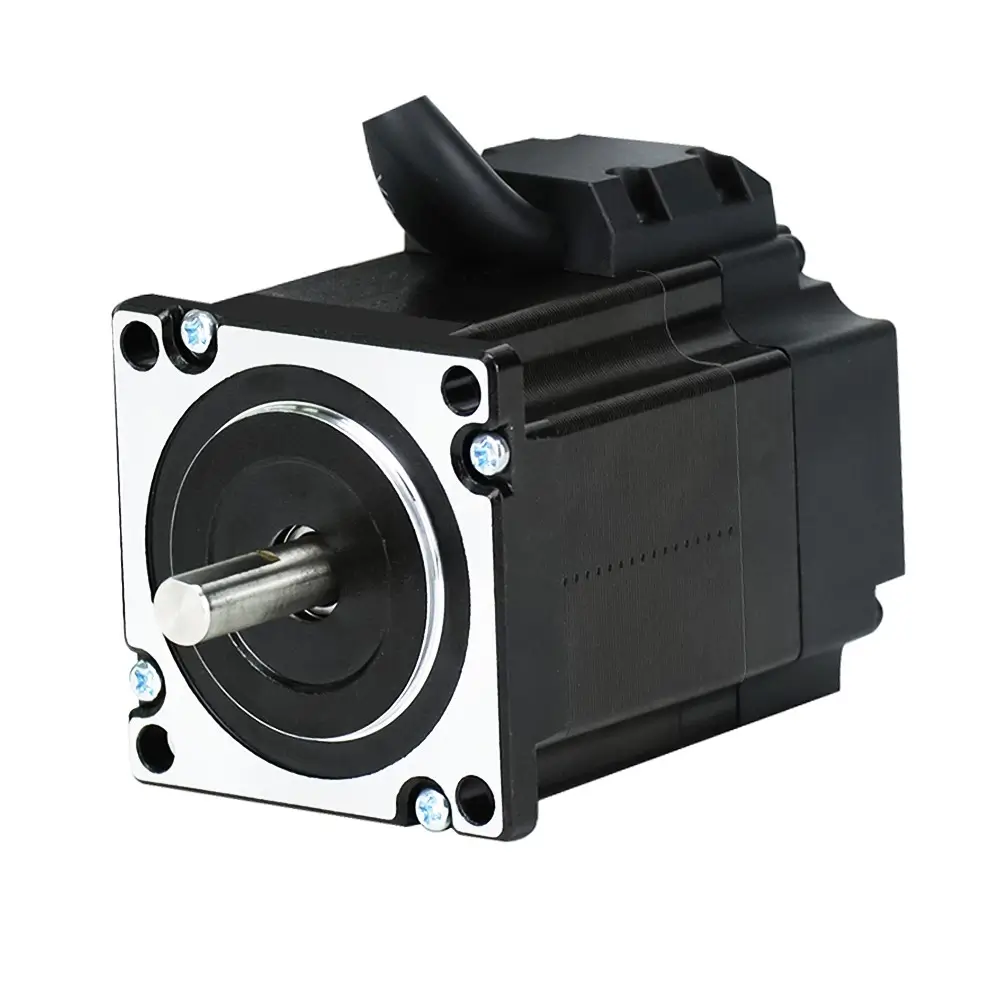
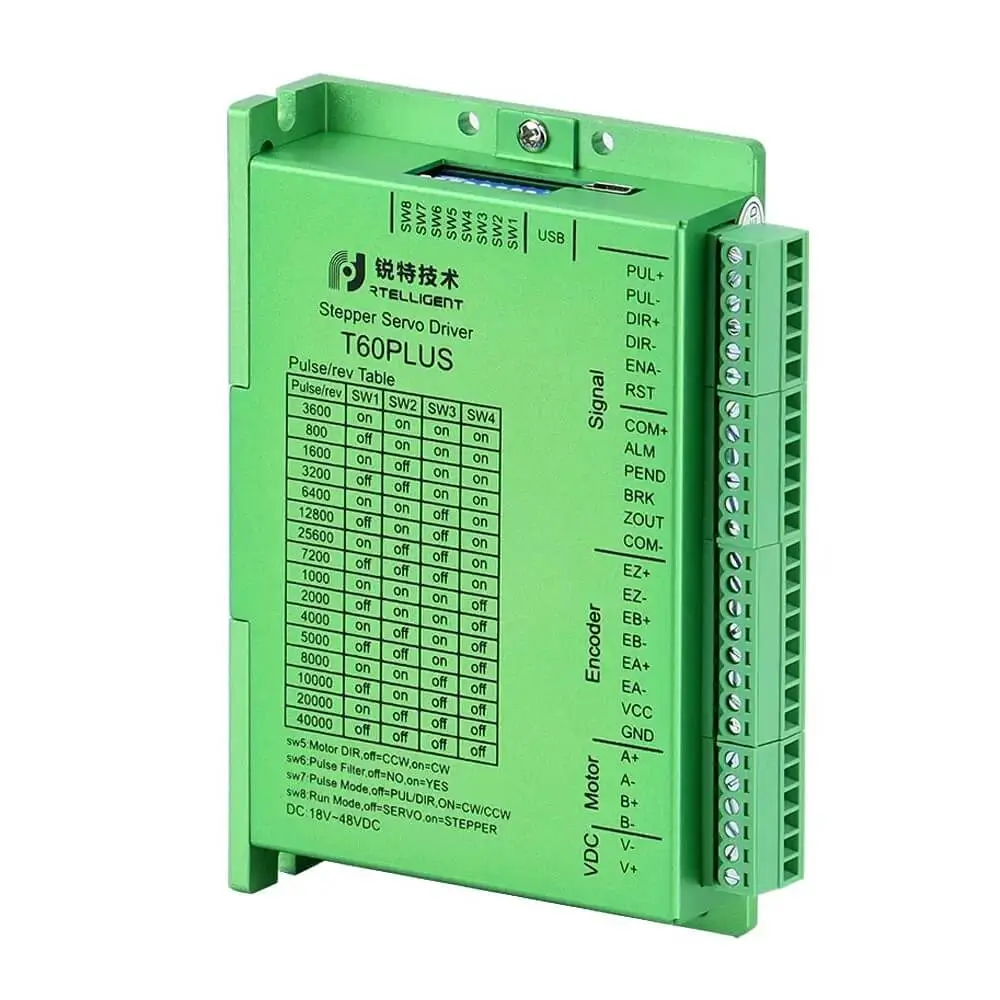
Open-loop and closed-loop stepper systems and AC servo systems, with help to size them for your machine before you buy.



Not Sure Which Motor Fits? Ask Our Engineers
Share the load, move distance, cycle time and controller. We recommend a stepper, closed-loop stepper or servo system and call back during business hours.
- Authorised Schneider Electric partner
- Supply across Gujarat and all India